A lot of homes run their HVAC systems harder than necessary. Energy-efficient ceiling fans can help you save more money. Mr. Electric wants to help you lower your bills and stay comfortable without constant thermostat changes. Keep reading because the next sections show how the right fan setup works in every season.
How Ceiling Fans Support Your Heating And Cooling System
A ceiling fan helps your HVAC do its job without working through long run cycles. When air moves across your skin and through the room, the temperature feels lower even though the thermostat stays where it is. Your air conditioner takes a break and still keeps the house at a comfortable level. This gives you a chance to enjoy cooler rooms without pushing the system around the clock. The air feels lighter because humidity doesn't settle in one spot. In colder weather, warm air escapes toward the ceiling. The lower part of the room stays cool, and the furnace keeps trying to catch up. A fan pulls the trapped heat down and spreads it across the room. The furnace gets relief because the warm air finally reaches the people in the space. It becomes easier to hold a stable temperature without overworking the heater. This lowers strain on the system and limits the chance you'll need electrical repair work during cold months when energy use climbs. This is why many homeowners ask electricians to look at their fans when they troubleshoot HVAC performance. Airflow has a real impact on comfort and on your bill, and a good fan setup solves a lot of frustrations.
Why Blade Direction Matters
Blade direction controls how the fan interacts with the room. A counterclockwise spin works during warm weather because it pushes air downward. That airflow cools your skin and keeps the room comfortable without big swings at the thermostat. The air conditioner rests more and still keeps up with the heat outside. A clockwise spin works during the colder months by pulling air upward and sending warm air down the walls. The soft circulation keeps warmth where you need it. Because of this, the furnace cycles less and holds temperature longer. You lose fewer pockets of heat at the ceiling and fewer cold spots near the floor, which helps the heating system last longer and use less power through the winter. Many fan problems come from the wrong blade direction. A fan that spins the wrong way fights your HVAC instead of helping it. A quick check at the start of each season prevents problems. After any ceiling fan replacement job, it helps to confirm the direction again to make sure the fan supports the system and keeps your electrical service panel from struggling.
How Modern Motors Reduce Energy Use
New fan motors change the way air movement works inside a house. Older motors waste energy through friction and heat. They take more power and create noise during long run hours. Modern motors use magnet-driven systems that need less electricity and produce better airflow. They jump into motion right away, stay cool, and keep their speed without strain. This lowers power use throughout the day. A cool motor can work for long hours without any issues. This lowers the chance of a circuit trip or breaker issue during heavy seasonal loads. It also limits wear on wiring that might otherwise lead to electrical repair calls. The motor stays consistent even at higher speeds. You get cleaner air movement with less energy draw, and that becomes noticeable on your utility bill. Noise control is another benefit. Many older fans hum or vibrate at higher settings. Homeowners turn them off because the noise becomes irritating. New motors run quietly. You can let the fan spin while you sleep or watch a show without background rumble.
The Difference Between Budget And High-Efficiency Models
A budget fan will move some air, but it will not deliver the full benefits that a high-efficiency model provides. A budget fan pulls more wattage through its motor. The blades might not have the right pitch, and the housing can wobble or rattle at higher speeds. You still get some airflow, but you pay for it with higher bills and more wear on the unit. Many budget fans reach the end of their lifespan early because of weak components. A high-efficiency model uses stronger materials, better blade design, and a motor built for quality performance. These parts work together to move more air at a lower wattage. The furnace and air conditioner cycle less, and that alone saves money every season. Some homeowners think a budget fan is enough, but a cheaper model can trip breakers when it struggles at higher speeds. It can shake loose from a weak mount or put stress on wiring when the motor starts to fail. This leads to preventable calls for electrical repair during seasons when energy use is already high. A high-efficiency model avoids those issues. When installed by electricians who understand load, wiring, and mounting strength, the fan becomes a long-lasting part of your household. It supports your HVAC, lowers energy use, and reduces the work your electrical service panel handles during peak months.
Do You Need a Ceiling Fan Upgrade?
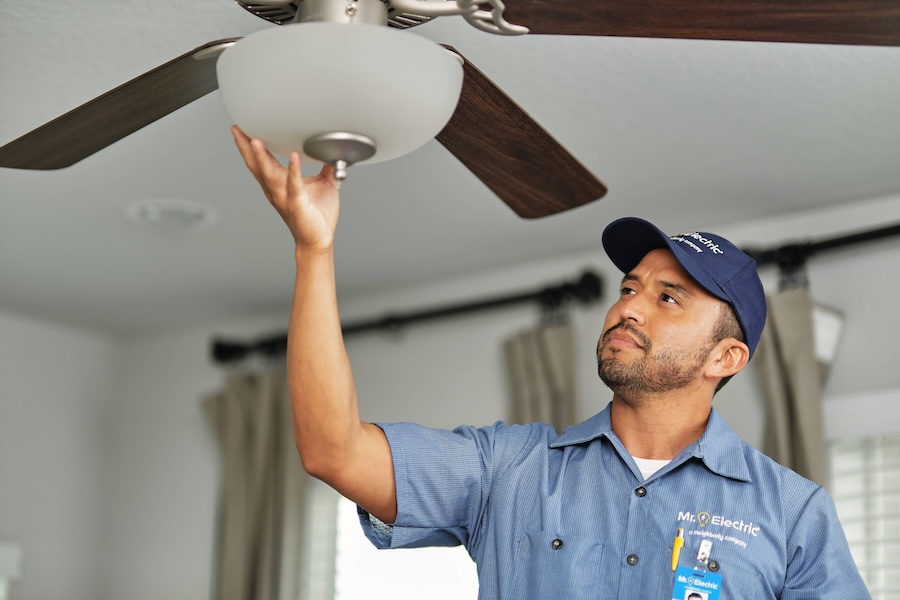
Energy-efficient ceiling fans work in every season and give your HVAC the support it needs to run without worry. Call Mr. Electric today for your ceiling fan replacement in Roxborough Park, wiring upgrades, or any electrical repair you need.