Electrical hazards can stay hidden for a long time. Working outlets and a breaker that hasn't tripped in years can exist alongside wiring that poses a fire risk. Mr. Electric has seen plenty of situations where homeowners had no idea what was happening behind their walls until a routine inspection found an issue that needed attention right away. Keep reading to find out what dangerous wiring looks like, how it gets discovered, and what we can do to fix it.
How Outdated Wiring Becomes a Fire Hazard
Wiring degrades over many years of use, and the signs show up slowly. Insulation around older wiring dries out, cracks, and pulls away from conductors. When bare wire makes contact with wood framing, insulation, or other materials, the heat generated can ignite a fire.
Homes built before 1980 may still have wiring systems that weren't designed to handle today's electrical loads. A household running multiple televisions, computers, kitchen appliances, and EV chargers draws a lot more power than the original electrical service was built to supply. A mismatch puts pressure on the system, which accelerates wear on connections, breakers, and wire insulation alike.
Knob-and-tube wiring is common in homes built before 1950, and they lack a ground wire completely. It also relies on open-air spacing for heat dissipation, which works until someone blows insulation into the walls and buries the wires. Covered knob-and-tube wiring is a known fire hazard, and most insurance companies refuse to cover homes that still have it active.
Common Types of Dangerous Wiring Found in Residential Homes
Electricians in Centennial, CO usually find a similar set of problems when they open up walls and pull outlet covers. The most common include:
- Knob-and-tube wiring that has been spliced into modern circuits without proper connectors
- Aluminum branch circuit wiring installed in the 1960s and 70s, which expands and contracts differently than copper, and loosens at connection points
- Cloth-wrapped wiring with insulation that has become brittle and flaked away
- Double-tapped breakers, where two wires share a single breaker terminal, are not rated for that configuration
- Ungrounded outlets that were replaced with three-prong covers without adding a ground wire
What a Professional Electrical Inspection Looks For
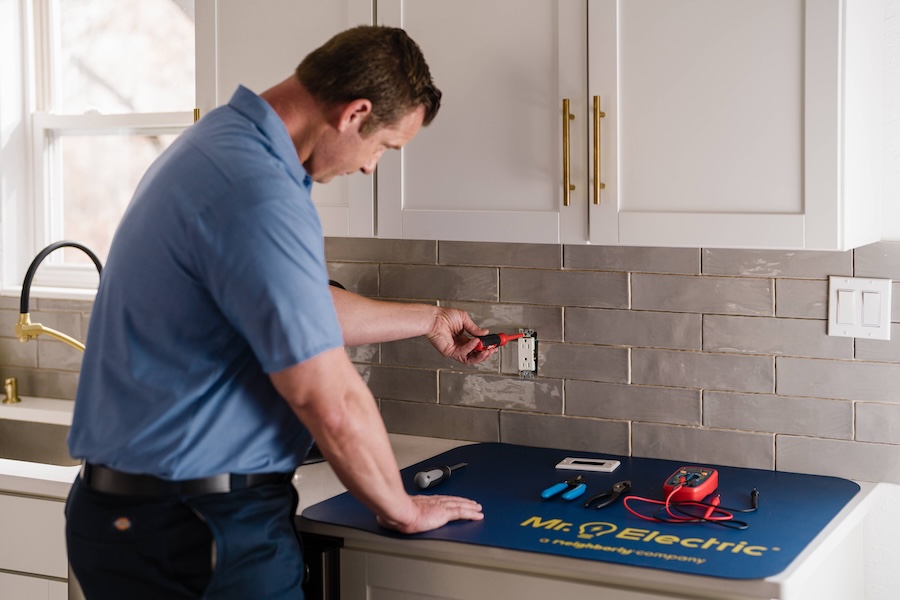
During a detailed electrical inspection, electricians test receptacles for proper grounding and correct wiring polarity, inspect the panel for signs of overheating, and look for double-tapped breakers or breakers that have been bypassed. They also check for wiring that's been modified without permits or by someone without training.
At the panel, an inspector looks at the bus bar connections, the condition of the breaker contacts, and whether the panel itself is a model with a documented history of problems. Certain breaker panels manufactured between the 1950s and 1990s have failure rates high enough that their replacement is now standard electrical repair work.
Inside walls, wiring is checked for physical damage, improper splices, and missing junction box covers. Any splice made outside of an accessible, covered junction box violates code and creates a hazard. Inspectors also look at how wiring enters and exits junction boxes, because sharp edges on metal boxes can cut insulation and create a short.
How to Tell If Your Outlets Are Telling You Something's Wrong
Outlets sometimes give visible and audible signals before they fail. A burning smell near a receptacle, discoloration on the outlet cover, or a cover that's warm to the touch all indicate heat buildup inside the box. All of these problems need immediate attention.
Flickering lights that are tied to a specific outlet circuit, repeated trips on the same breaker, or outlets that only work occasionally point to a loose connection or a wiring problem upstream. Intermittent arcing at a loose connection generates temperatures that can ignite wood framing even if the circuit isn't under a heavy load.
Two-prong outlets in a home are a clear indicator that the branch circuits lack a ground wire. The absence of a ground doesn't always cause an immediate problem, but it means surge protectors won't work as intended, and sensitive electronics aren't protected. Electrical outlet replacement that adds proper three-prong grounded receptacles requires either running a ground wire back to the panel or installing GFCI protection, depending on what the circuit allows.
What Homeowners Should Know About Aluminum Wiring
Aluminum branch circuit wiring was installed in millions of homes between 1965 and 1973. It was a cost-effective alternative to copper during a period when prices spiked, and it conducts electricity adequately. The problem is its behavior at connection points.
Aluminum expands and contracts more than copper, and the movement loosens connections at outlets, switches, and panel lugs. Loose connections arc. CO/ALR-rated devices and proper anti-oxidant compounds at every connection point are the minimum standard for electrical service work done on aluminum wiring systems. It's best to replace it, but at the very least, make sure the system is closely monitored by a qualified electrician who is familiar with the requirements for working safely with the material.
Schedule an Inspection Before There's an Emergency
Wiring problems can build quietly behind outlet covers and inside panels until something trips, sparks, or ignites. Homeowners who avoid the worst outcomes are the ones who schedule inspections. Mr. Electric provides electrical repair and electrical outlet replacement services in Highlands Ranch performed by qualified electricians who know current codes well. Contact us to schedule an inspection and find out exactly what's behind your walls.