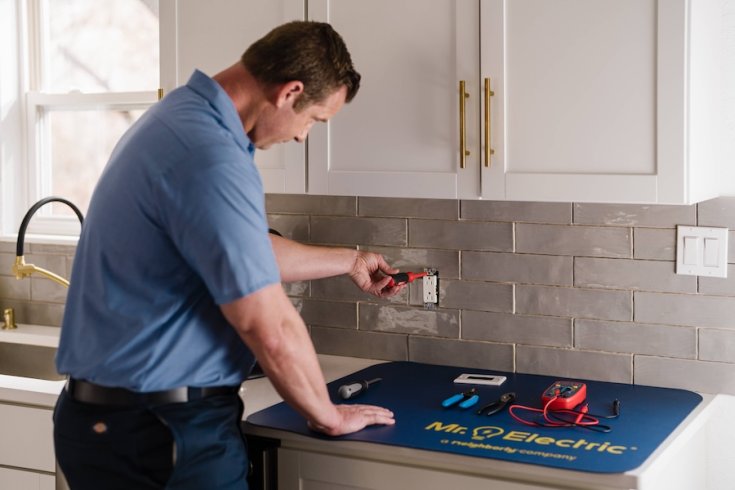
Most people think their smoke detectors are working fine because they passed the last battery test. The problem is that sensors degrade, and a unit that beeps on command can still fail to respond when it really counts. Mr. Electric sees this come up regularly during home electrical inspections, and smoke detector replacement is a service that tends to get pushed off longer than it should. Knowing why older units break down, and what to look for before that happens, could make a big difference. Keep reading to find out what's going on inside an aging detector and when it's time to act.
How Long Smoke Detectors Are Designed to Last
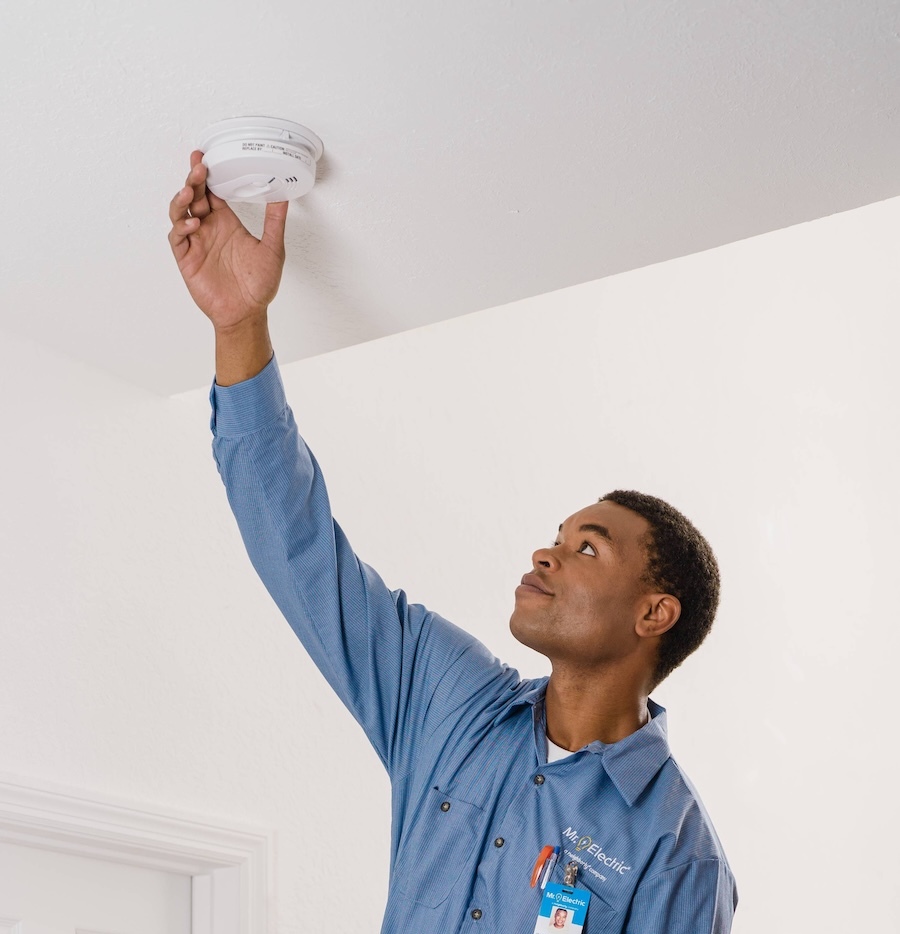
Smoke detectors have a hard expiration point. The National Fire Protection Association recommends replacing every smoke detector at the ten-year mark from its manufacture date, not the installation date. This date is stamped inside the unit on the back panel. If you can't find it or the print has faded, the detector is likely old enough to repeat.
The ten-year window exists because manufacturers engineer these units to perform reliably for a decade under normal residential conditions. Past that point, performance drops off, and the unit may pass a battery test while the actual sensing chamber is no longer responsive enough to detect a real fire.
This is one of the most common findings that experienced electricians document during whole-home safety inspections. Homeowners test the alarm button, hear the chirp, and assume everything is fine. The button tests the horn and the battery circuit, not the sensor.
Why Sensor Degradation Happens and What Causes It to Speed Up
Every smoke detector uses a sensing chamber that interacts with airborne particles. In ionization detectors, the chamber contains a small amount of Americium-241, a mildly radioactive element that ionizes the area between two charged plates. Smoke disrupts the ionization and triggers the alarm. In photoelectric models, a light beam and a receiver sit at an angle inside the chamber. Smoke scatters the light toward the receiver and sets off the alarm. Both systems depend on components that lose precision as they age. Several environmental issues can accelerate degradation:
- Cooking grease and airborne oils coat the sensing chamber and block the flow of particles
- Humidity causes corrosion on the internal contacts and circuit board
- Dust buildup inside the chamber diminishes sensitivity to smoke
- Temperature extremes from attics or garages stress the electronic components
Homes where cooking happens frequently, or where a detector is installed near a bathroom or exterior wall, tend to see faster degradation. An electrical service call that includes detector assessment can catch these conditions before they become a liability.
A detector installed in a kitchen hallway ten years ago has absorbed years of particulate matter. The internal components may look intact, but the sensing chamber's ability to respond quickly to combustion particles is compromised. By the time visible smoke reaches a degraded sensor, valuable response time is already gone.
The Difference Between Ionization and Photoelectric Detectors
Choosing the right type of detector matters as much as replacing it on schedule. Ionization detectors respond faster to fast-flaming fires, the kind that spread quickly with high heat and visible flame. Photoelectric detectors respond faster to slow-smoldering fires. A smoldering couch cushion or an electrical fire burning inside a wall will produce smoke for several minutes before it ignites. Ionization detectors can miss that window entirely.
The current best practice is dual-sensor coverage, either through combination detectors that include both technologies in a single unit, or through paired placement using one of each type per floor. Dependable electricians in Greenwood Village who perform smoke detector replacement as part of a more extensive electrical service visit can help determine which type, or combination, suits each area of the home.
Hardwired combination detectors eliminate the battery dependency problem and interconnect throughout the house so that one triggered alarm activates all of them. The interconnection is especially important in larger homes, multi-story layouts, or any home where sleeping areas are far from the kitchen or utility spaces.
What Building Codes Say About Detector Age and Placement
Building codes set minimum requirements, and those requirements have changed significantly in the past two decades. Homes built before 2000 were not required to meet current placement standards. Many older homes have one detector per floor, which may have satisfied the code at the time of construction, but falls short of what current NFPA 72 standards recommend. Current placement guidelines require:
- One detector inside every sleeping room
- One detector outside each sleeping area in the immediate vicinity
- One detector on every level of the home, including the basement
- Detectors installed on the ceiling or on a wall no lower than four inches from the ceiling
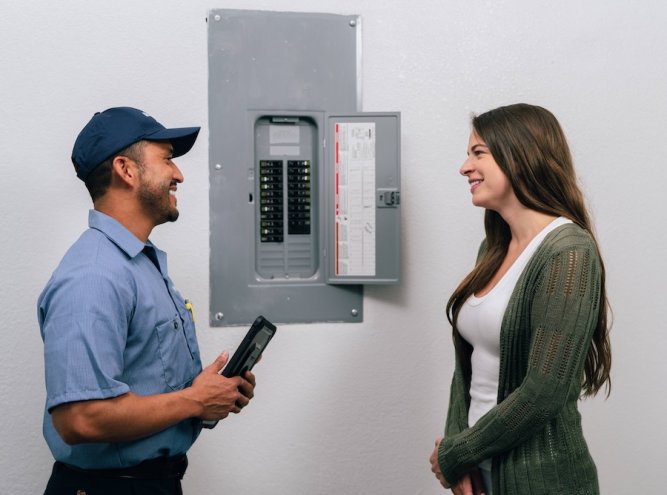
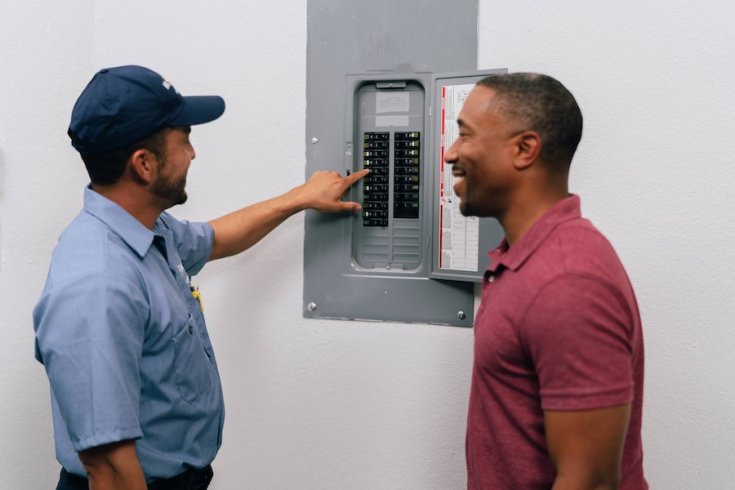
A home that hasn't had an electrical service evaluation in several years may have detectors that fail due to age, placement, or both. Skilled electricians frequently find detectors installed in hallways when bedrooms now occupy spaces that were renovated after the first installation. Room additions, converted garages, and finished basements are common examples.
Local governments sometimes adopt stricter requirements than the NFPA baseline, particularly around carbon monoxide detector placement and interconnection mandates. Checking with a licensed electrician familiar with local code is the most reliable way to confirm your home meets current standards.
Do You Need a Fire Alarm Upgrade or Electrical Repair?
A unit that’s past its service life can pass a button test in the morning and fail to respond to a kitchen fire that afternoon. Mr. Electric offers reliable smoke detector replacement as part of comprehensive home electrical service, so homeowners don't have to guess whether their system meets current standards. Licensed electricians check detector age, placement, and type, then make targeted recommendations based on your home's layout and local code requirements. Contact us to schedule an inspection, replacement, new installation service or electrical repair.