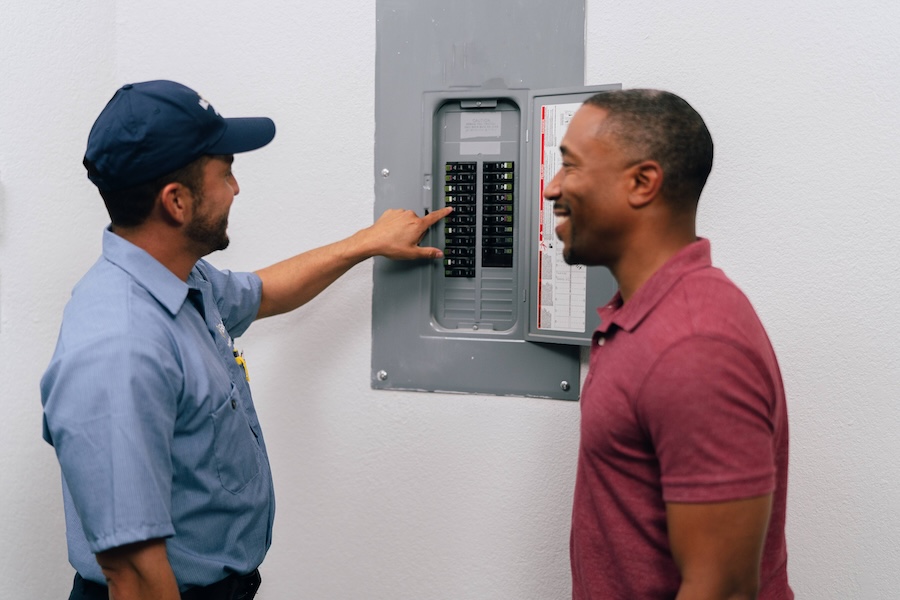
Tripping breakers are easy to dismiss as a minor inconvenience, but a circuit that keeps tripping is telling you something specific about what's happening inside your electrical panel. Mr. Electric works on overloaded circuits all the time, and the homes where the problem gets ignored the longest are the ones where the damage is hardest to reverse. An overloaded panel is a fire risk, an appliance killer, and a sign that your home's electrical system hasn't kept pace with the demands being put on it. Read more to find out what overloaded circuits mean, what's causing them, and what it takes to get your panel back to where it needs to be.
What an Overloaded Circuit Is and How It Happens
Every circuit in your home is rated to carry a specific amount of electrical current, which is measured in amps. When the devices drawing power from that circuit exceed its rated capacity, the breaker trips to cut the flow before the wiring overheats. The problem starts when tripping becomes a pattern instead of a rare event.
Overloads happen when too many high-draw devices share the same circuit. A single circuit feeding a refrigerator, microwave, and toaster in the same kitchen corner will regularly pull more than 15 or 20 amps. Homes built before the 1990s were wired for far fewer appliances than what's plugged in today, so the circuits themselves were never designed for current load demands.
Electricians in Denver, CO see this most in kitchens, home offices, and laundry rooms, where high-wattage equipment clusters in one zone. The circuit wasn't added or upgraded when the appliances were, and now the panel pays for it every time someone runs the dryer and the air conditioner at the same time.
What Happens Inside Your Panel When a Circuit Is Consistently Overloaded
A breaker that trips once and resets without issue isn't a crisis. A breaker that trips weekly is a different situation. Repeated overloading degrades the breaker's ability to trip at the right threshold, which means it may eventually fail to trip when it should.
Inside the panel, the wiring connecting an overloaded circuit absorbs heat every time the load spikes. Residential wiring is rated for specific temperature limits, and repeated thermal stress breaks down the insulation around the conductors. Once the insulation cracks or melts, you have exposed conductors inside a metal box that's full of other wiring. That's when electrical repair becomes urgent.
Bus bars are the metal strips that distribute power to each breaker. They can also corrode or loosen under repeated overload conditions. A loose connection at the bus bar generates heat at the connection point, which makes it harder to detect. Electricians who inspect panels after overload complaints often find discoloration, melted plastic, or burn marks that the homeowner had no idea were there.
Why Older Electrical Panels Struggle to Handle Modern Power Demands
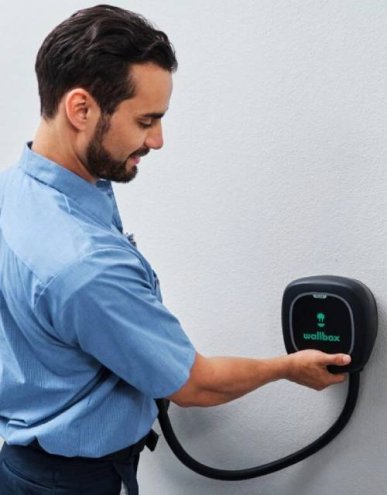
A panel installed in the 1970s or 1980s was sized for a home that used roughly 100 amps of total service capacity. Today's homes with EV chargers, heat pumps, multiple refrigerators, home theater systems, and smart appliances regularly push past 200 amps.
Some older panels also have known defects. Certain brands manufactured between the 1950s and 1990s have breakers documented to fail under load or to weld themselves in the closed position. If your home still has one of these panels, electrical panel replacement is an essential safety upgrade. Licensed electricians can identify these panels on sight and tell you exactly what you're dealing with.
Wiring gauge also matters. Older homes may have aluminum branch circuit wiring or undersized copper that was compliant at the time but creates resistance and heat under modern loads. Electrical service entrance wiring and panel capacity need to match the actual demand in the home, and for houses more than 30 years old, a professional evaluation will make sure that everything's fine.
When Your Panel Needs an Upgrade
Not every overloaded circuit means the panel needs a replacement. If the overload is isolated to one zone and the panel has open slots with available capacity, adding a dedicated circuit is an electrical repair that resolves the problem without a complete upgrade. A kitchen that trips breakers every time the microwave and coffee maker run together is a good candidate for a dedicated 20-amp circuit for the microwave alone.
The calculation changes when the panel is full, the breakers are aged, or the total service amperage is too low for the home's current load. Signs that point toward electrical panel replacement include:
- No open breaker slots and no way to add a subpanel
- Breakers that trip without a clear cause
- Visible burn marks, melted plastic, or a burning smell near the panel
- A 100-amp service panel in a home with central air, an electric range, or an EV charger
- Panels from manufacturers with safety recalls
In those cases, a service upgrade to 200 amps and a new panel resolves the capacity problem and brings the electrical service into compliance with current code, which matters for insurance coverage and for resale.
When the line between a circuit fix and a full upgrade isn't obvious, a licensed electrician can load-test the panel, review the existing wiring, and give you a recommendation based on what the panel is handling. A professional assessment costs less than fire remediation or an appliance replacement caused by a failed breaker.
Are You Ready to Stop Guessing About Your Panel?
If your breakers keep tripping, your panel is warm to the touch, or you're adding appliances to a home that hasn't had an electrical service in the past decade, don't wait for a failure to get help. Mr. Electric provides panel inspections, electrical repair, circuit additions, and electrical panel replacement performed by qualified electricians who work to code and stand behind their work. Call today to schedule a service visit.